


The Journey - Infusions through time

Historical Brew

A Cupful of History

The long and rich history of tea spans thousands of years and several cultures. Here’s just a brief overview of the tea’s journey.

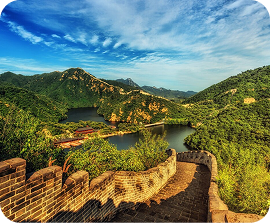
Born in BCE: The origins of tea can be traced back to ancient China.
Legend has it that the Chinese Emperor Shennong discovered tea in 2737 BCE, when a few leaves from a nearby tree fell into his boiling water, and he found the resultant brew to be refreshing.

Even the consumption of tea has evolved over the eras. From being a luxury beverage consumed by the privileged few, it has now become the second most widely consumed beverage in the world.
Let’s see how this changed over time.

Tea culture
spreads in China

Over time, tea became an integral part of Chinese culture; finding a place in various rituals and ceremonies. The art of prep...

Read more +

Japan gets its first
taste of tea

Tea was introduced to Japan by Buddhist monks who had travelled to China to study. The Japanese developed their own...

Read more +

Tea comes to
Europe

In the 16th century, Portuguese and Dutch traders brought the concept of tea to Europe. It rapidly gained popularity, especially...

Read more +

Commercialisation

As the British Empire grew, so did the demand for tea; hence tea cultivation and production became more commercialised....

Read more +

Current times

In modern times, tea is widely consumed across countries, and comes in countless varieties, flavours and forms. There has also....

Read more +

Top Manufacturers/
Consumers/Importers

USA

USA

UK

UK

Singapore

Singapore

USA

USA

UK

UK

Singapore

Singapore

USA

USA

UK

UK

Singapore

Singapore

Our Approach

Tea Cultivation

This is a perennial crop, the bush has an economic life of more than 60 years though the life cycle can cross above 100 years.

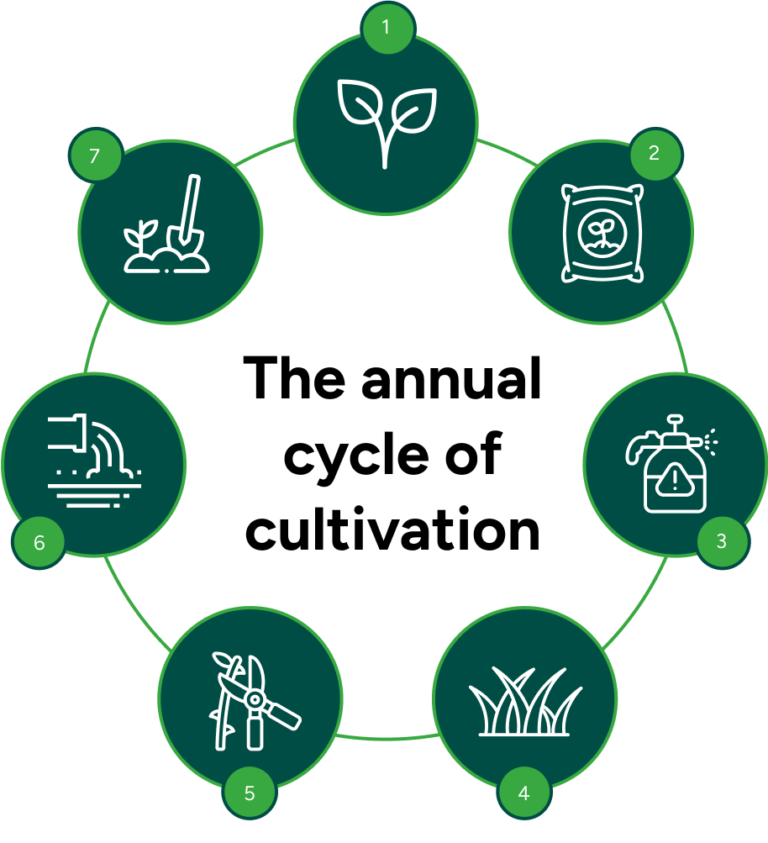
The annual cycle of cultivation activities in the good tea growing estate are mainly as given below ;

1. Harvesting

2. Fertilizer applications

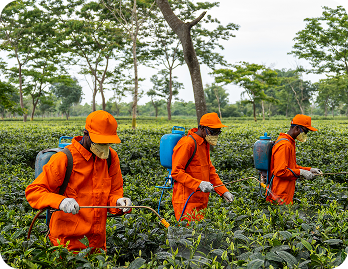
3. Pest control

4. Weed control

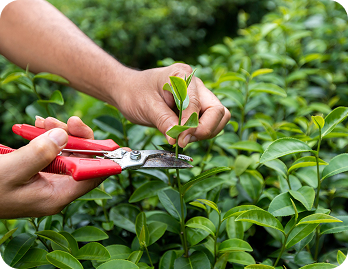
5. Pruning & other bush Hygiene activities 

6. Drainage

7. Development activities of replacing unproductive tea areas
  • Tea Nursery establishment and maintenance.
  • Shade & Fuel Nursery establishment and maintenance.
  • Water conservation for ecological balance.
Tea cultivation requires the balance of moisture and aeration in growing areas. The establishment and maintenance of water recourses and water bodies play significant roles in tea cultivation.

Harvesting

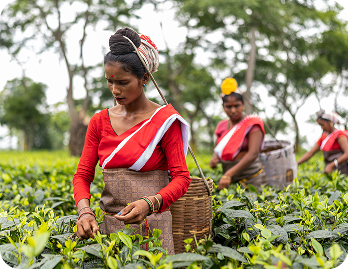
Most elaborate operation in Tea cultivation. This aspect plays a key role in quality and economics of the estate. This requires skill and focus.

Fertilizer Application

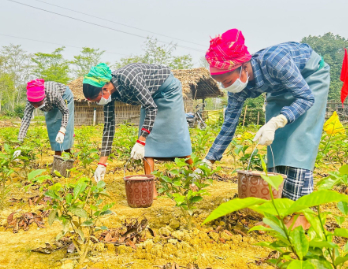
Fertilizer needs go hand in hand with Harvesting as the plants needs nutrients to replace, leaf harvested with regularity.

Pest & Weed Control

With the modern system of Tea growing control of weeds & pests acquires major status. This is owing to the emphasis on conservation of nature. The demand on natural resources is growing with growth and production. Madhuting Tea Company follows compliance level of Global Standards on control of Pest & Weeds.

Pruning/Bush Sanitation Activies

These are carried out to keep bushes productive throughout its life span. A well tended tea plant could outlive the normal trend and remain productive even upto hundred years.

Development Activities

Madhuting Tea Company retains sustainable active development programme. Tea & Shade Nursery are established and maintained regularly for continuous development.

100%

Tea Production

From leaf to cup, tea undergoes a complex journey. The way tea is processed—whether black, green, or oolong—determines its taste, color, and aroma. Here’s a glimpse into the production process:

Orthodox

Process

CTC

Process

CTC

Orthodox

Withering 

Conditions

Physical & Chemical

Conditions

Physical & Chemical

Rolling/CTC

Rotorvane, BLC

CTC Machines used for crush tear & curl

Rolling table

Used for Rolling

Fermenting

Process of Oxidation

Process of Oxidation

Drying

Cessation of Chemical process, removal of moisture

Cessation of Chemical process, removal of moisture

Sorting

Grading to various grades and sizes-

 BOP(L), BPS, BOP, BP, OF/PF, PD

, DUST, BP1, OF1& DUST1

Grading to various grades and sizes-

 FOP, GFOP, TGFOP, TGFOP1,

BOP, BPS, FBOP, GFBOP, GBOP, GOF, OD, FBOP1 & OD1

Withering

To breakdown complex chemical compound in the cell to single compound which along with other simpler molecules they recombine to contribute to quality attributes of tea like ‘body’ and ‘flavour’ at a later stage.

Leaf Maceration

The principal objectives of leaf maceration are to undertake cell rupture in the rolling or CTC machine where progressive disintegration of cellular organelles takes place.

Oxidation (Fermentation)

Fermentation is the process during which the polyphenols in the tea leaf are oxidized in presence of the enzymes and subsequently condensed to form coloured compound contributing to the quality attributes of Tea.

Drying

Drying is the last stage of making Black Tea. The process is to arrest enzymic reaction as well as oxidation (Fermentation) and to remove moisture from the leaf particles. It also helps in producing a stable product with good keeping quality.

Sorting, Grading and Packing

Sorting is the operation in which particles of Bulk teas are separated into various grades, different sizes conforming to the trade requirements.

Tea, The Super Health Drink

Apart from uplifting the soul, tea has many wonderful benefits. Of course, it depends on what kind of tea you’re drinking.

Withering

Chemical wither

To breakdown complex chemical compounds in the cell to a single compound, which along with other simpler molecules recombine to contribute to quality attributes of tea like ‘body’ and ‘flavour’ at a later stage. Chemical wither starts immediately after plucking. This process normally takes about 12 to 16 hours.

Physical wither

Physical withering reduces moisture content in the leaf and makes the leaf ‘flaccid’ which is essential for the subsequent steps for processing and for twisting or curling. This process takes about 4 to 6 hours.

The principal objectives of leaf maceration are to undertake cell rupture in the rolling or CTC machine where progressive disintegration of cellular organelles takes place. The mechanical breaking of shoots of this stage also results in the formation of particles of various shapes & sizes on the method adopted.

Orthodox process of manufacture

In the Orthodox process of manufacture maceration of the disruption of the leaf cell is carried out in the Rolling Table. During Rolling, juice from the leaf is removed / extracted out and the leaf is twisted and broken into a small particle.

CTC process of manufacture

The CTC machines achieve the three actions of Crushing, Tearing and Curling in the same machine at one go. Leaf appearance make, grade percentage, fibre content, Liquor and Infusion depend on the cut obtained in the CTC machine.

Fermentation is the process during which the polyphenols in the tea leaf are oxidized in presence of the enzymes and subsequently condensed to form coloured compounds contributing to the quality attributes of Tea. Fermentation starts immediately after cell rupture. Following physical and Bio-Chemical changes take place during fermentation.

Physical changes

1) Green colour changes towards Brown Coppery Colour
2) Grassy flavour gradually disappears, Typical Tea flavour starts appearing

Bio-chemical changes

1) Condense to Theaflavin (TF) and Polymerize to Thearuligess (TR) and other product
2) Formation of Tea cream with a combination of TF, TR and caffeine
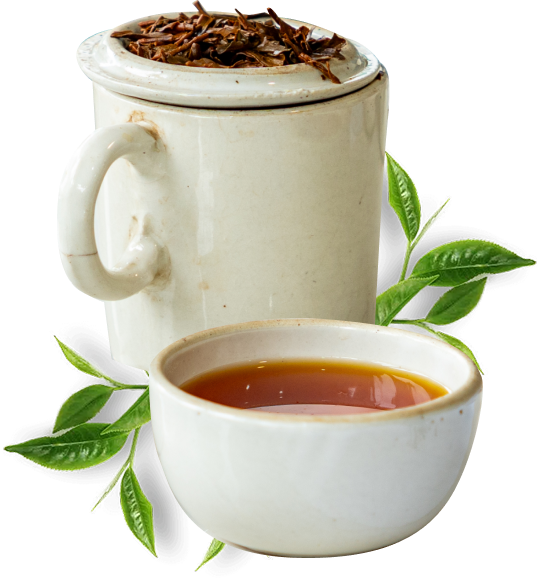

Drying is the last stage of making Black Tea. The process is to arrest enzymic reaction as well as oxidation (Fermentation) and to remove moisture from the leaf particles. It also helps in producing a stable product with good keeping quality.

Sorting is the operation in which particles of bulk teas are separated into various grades, different sizes conforming to the trade requirements.

Four main grades are produced, namely, whole leaf grades, Brokens, Fannings and Dusts within each of these sections. Tea is further split up into grades of varying qualities.

After the tea has been manufactured and sorted into its respective grades, it is necessary to be packed it suitable containers so that its quality does not deteriorate. Bulk packing containers should be fed from a hopper at a regular flow to ensure no loss of bloom and damage of leaf.

Tea, The Pro-Health Drink

Apart from uplifting the soul, tea has many wonderful benefits. Of course, it depends on what kind of tea you’re drinking.

YUMM CHA Recipes

Tea can surprise you with its ability to be the hero in every recipe. Chill Winter drinks, iced matchas, herbal and spiced concoctions, you name it. Creamy, sparkling, decadent or sprightly, tea can blend in harmoniously in almost every recipe.